If you want to know about the auditorium design or terminology used in landscape or introduction of landscaping and its role, please click the link.
A landscape garden is a type of garden design that seeks to create a natural-looking and aesthetically pleasing outdoor space that blends in with the surrounding environment. The goal of a landscape garden is to create a harmonious and functional relationship between the garden and its surroundings.
1) Hanging garden of Babylon (Mesopotamian civilization)
- The garden is listed as seven wonders of the world as it existed in hot dry region
- The garden was constructed by Nebuchadnezzar II for his queen Amytis
- It existed in during 600-400 BC near Iraq
- This was a structure in steps like Ziggurat on the bank of Euphrates River and irrigated by chain bucket system
- It is called hanging garden as it looked projected when seen from top
- Trees were planted by filling soil in sunken courts
- Excellent example of Architecture and Hydrology Engineering

[adinserter block=”15″]
2) Persian Landscape style
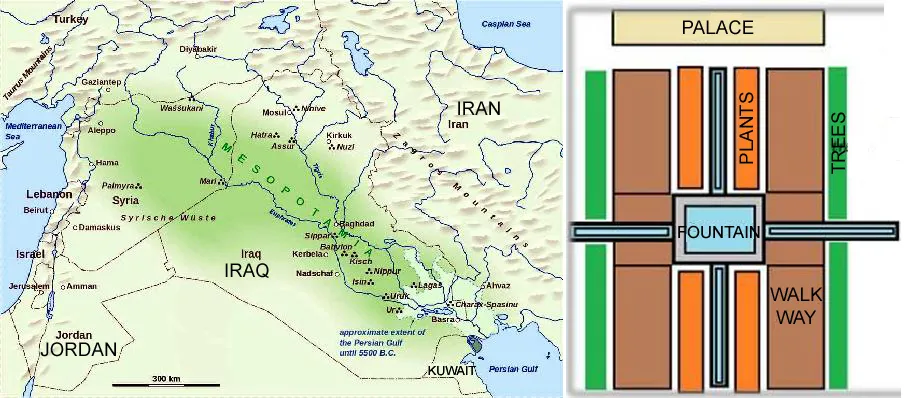
- The land of Mesopotamian civilization is called Persia
- It lies between the rivers Tigris and Euphrates
- The climate of the region was hot –dry
- The garden has rectangular geometry with division into four sectors
- Symmetrical about central axis
- Persian garden symbolizes Eden (Paradise on earth) and its division in to four sectors depicting four sacred elements soil, water, wind and fire
- Shape made easy to precisely locate point for planting of trees and execution of structural elements
- Wide application of thick brick wall around the rectangular garden as enclosure
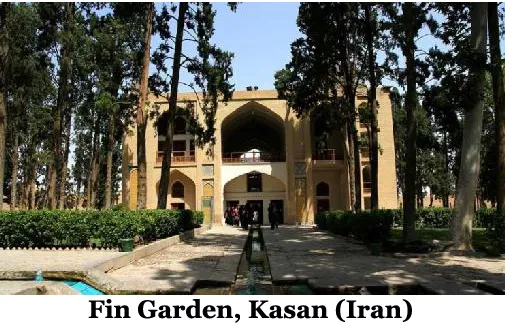
- The Persian gardens have been enlisted in world heritage site due to their OUV
- Maintenance of circulation of water in channels creates functional and aesthetic exigencies
- Cannels carrying water in rectangular layout
- Arrangement of trees and plants create lower temperature microclimate
- There are pools at regular interval to distribute water by gravity
- The pool serves as a focus and source of humidity
- The purpose of gardens are relaxation and socialization

- The water channels, buildings, vegetation and terrain integrate together to create unique man-made environment
- Music accompanied constantly to enhance the effect of flow of water in channels
- The landscape design during Mughal period in India has been inspired by Persian style garden
3) Mughal Landscape style (1526-1857 AD)

- Mughals style landscape were inspired by Persian Landscape
- The Mughal garden introduced by Babur to Indian was used to decorate surrounding of the buildings
- The use of running water in their palaces and pleasure resort was a special feature of the Mughal garden
- A notable feature of the Mughal Architecture was the used of red sand stone
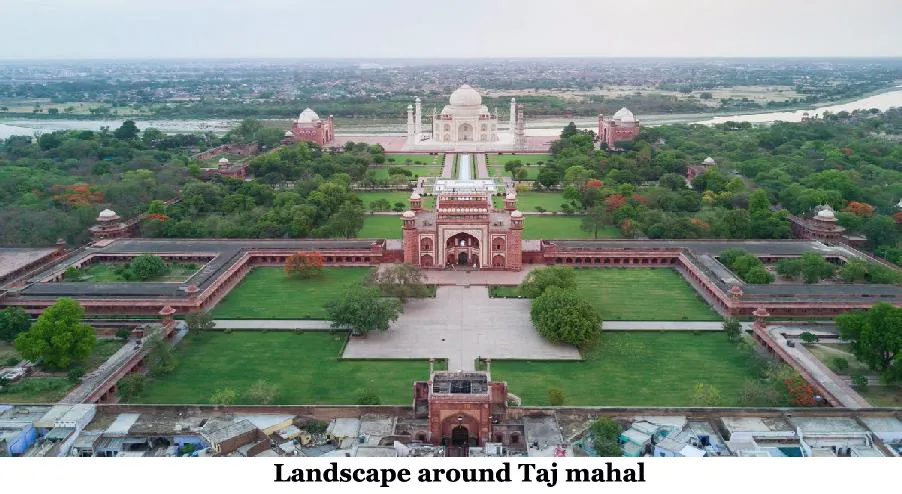
- Significant use of rectilinear layouts are made within the walled enclosure
- The famous char bagh gardens are at Taj Mahal, Shalimarbagh at Lahore
- Garden in which river flow is a phrase used in the Koran more than 30 times to describe Paradise
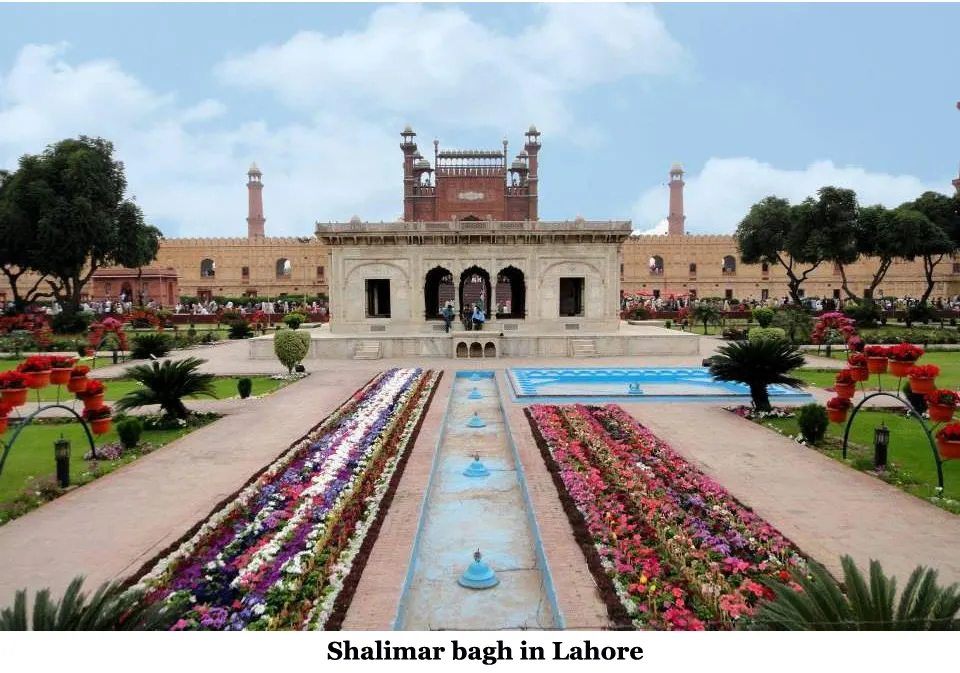
- The Muslim rulers of subsequent times tried to create man-made reflections of the Koranic paradise on earth
- Cool pavilions, flowing springs, gushing fountain shady and fruity trees, mentioned in Koranic description of Paradise are essential feature of Mughal garden
[adinserter block=”16″]
Salient features of Mughal landscape gardens

- Walls
- Gates
- Fountains
- Tomb
- Baradari or Pavilion
- Trees, flowers and birds
- Connecting path to cross the water channel
4) Spanish gardens

- The Paradise garden is interpreted with a central cross axis in four cardinal directions
- Spanish gardens are symmetrical along central axis
- Long water channels set in a walled courtyard where water, reflects and flows
- The remaining four quadrants often had fruit trees and fragrarant plants
- The characteristic sensory experiences are refreshing coolness, humidity, sounds, greenery and fragrance
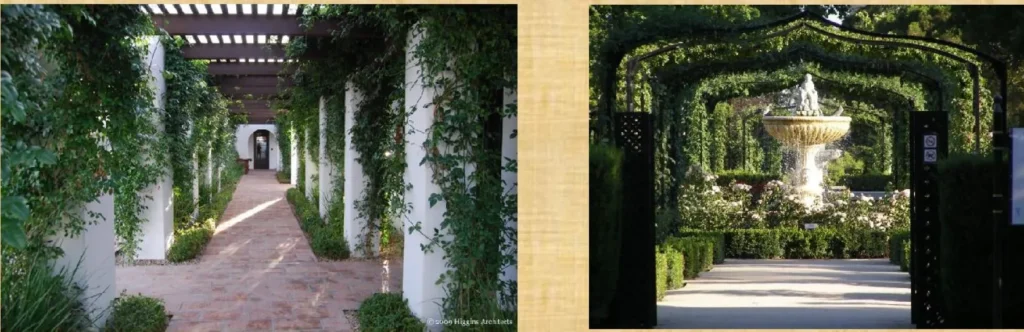
- This type of garden is compatible with the Spanish climate of sun and heat
- Provision for shade are given with the use of arcade, pergolas, trellising and the garden pavilions
- Ceramic elements and tiles are used in water feature, for structural, decorative and as paving

- In Spanish garden style, Walled section create patio areas, courtyard house, and terraces offering views into landscape area
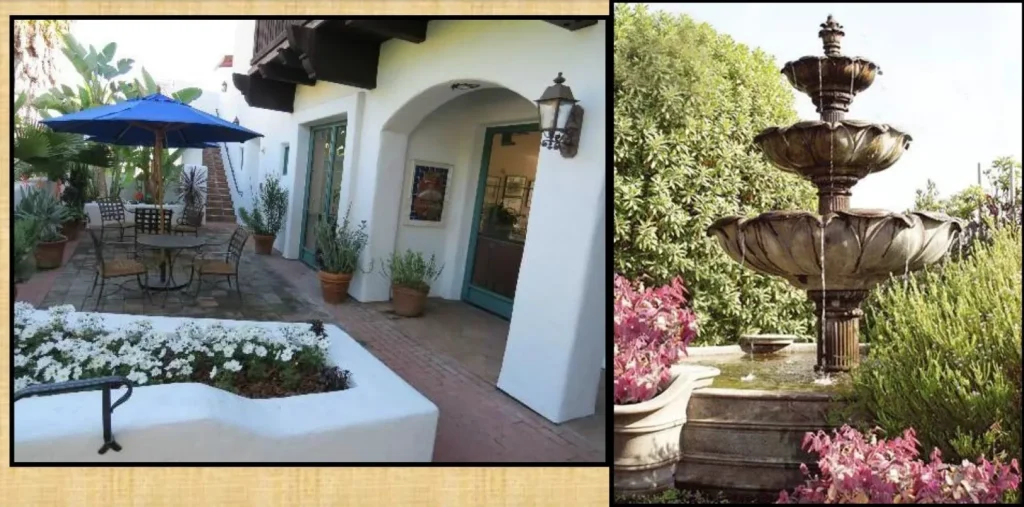
- In the garden, tiered Spanish fountains and Moorish lantern are impressive landscape elements

- Planting along walkways in Spanish garden is arrange as smaller plants to trees away from edge of path
- Plants in Spanish garden are of wide variety like, fruit trees, Flowering and fragrance plants

- Water is important constituent of Spanish garden with reflection of plants in the pool as in Islamic landscape

- Sculpture and street furniture are important features
[adinserter block=”17″]
5) Japanese gardens (Zen Gardens)

- Earlier Gardens in Japan were designed in order to bring spiritual sense to the garden
- It was designed to give peaceful environment to people and can meditate
i) Characteristics features of Zen Gardens
- No symmetry is followed
- Planning is organic in shape
- Harmony is key factor
- Emphasis and dominance is strictly on the natural elements
- The flow in organic shapes depicts rhythm
- Hierarchy and variety can be seen in softscape
ii) Elements of Japanese garden
- Water
- Rock stone and sand
- Garden bridges
- Stone lantern and water basin
- Garden fences and gates
- Trees and flowers
- Fish
Water

- It is the most important element of Japanese garden
- Water is present in the form of pond or stream
- Japanese have learnt to exploit the sound of water in all its various forms, powerful water fall water basin
- The banks of the water body are bordered by rocks in order to preserve natural shapes, Man- made ponds are unsymmetrical
- In case of dry rock garden it is depicted by sand in wave form
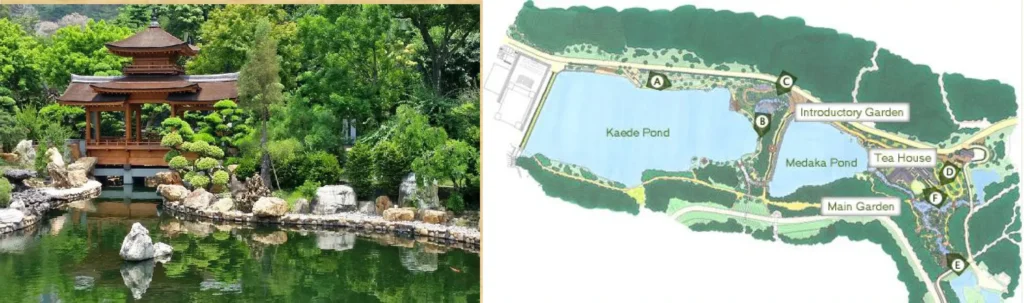
- In Buddhist tradition (Followed by Japanese), Water and stone are opposite and complement each other
- As per the tradition, stream and ponds and stones are put at a place where it is most likely to be, as it attracts fortune
Rocks, Stone and gravel
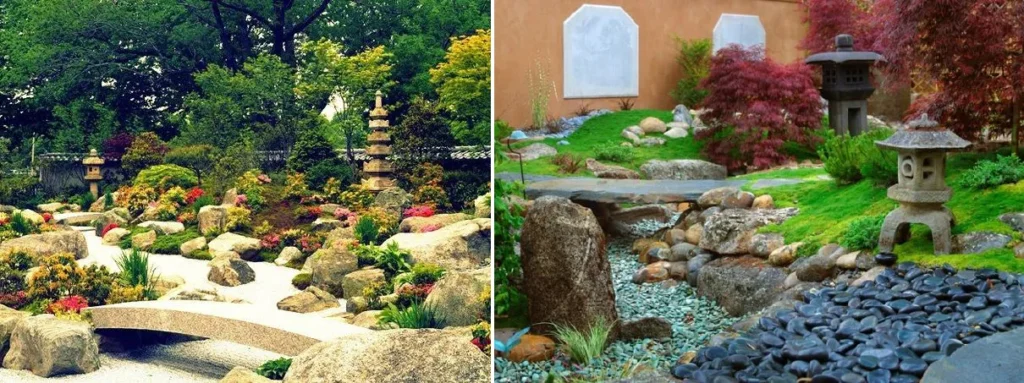
- Rock, Sand and Gravel are essential feature of the Japanese garden
- Rocks act as coordinates for garden project
- Variation in rock sizes offer greater contrast & interest resulting in more dynamic arrangement of rocks
- Flat stepping stone provided to protect the grass from foot
Effect of ocean ripples through a swirling arrangement of stones and aggregate
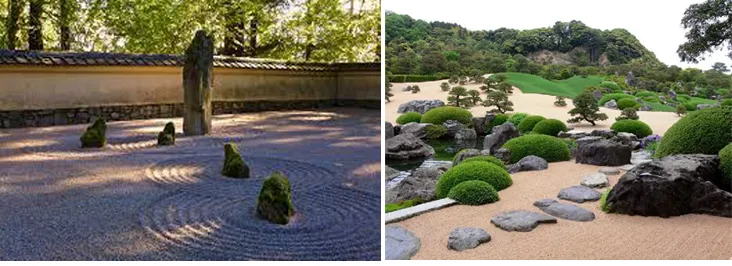
- Zen gardens have a unique feature of implementation of dry water bodies in the form of stone aggregate (depicting water) and rock depicting island
- The ripple effect conveys a sense of calmness, tranquility and serenity.
Garden bridges

- Bridges can be constructed with stones or wood
- Bridges if made of wood can be painted red if it is used for temple
[adinserter block=”18″]
Stone lanterns

- Stone lanterns are placed beside the water bodies to illuminate and enhance aesthetics
Fishes
- Fishes of different colours in ponds are important feature of the Japanese garden
Overall, landscape gardening is a highly versatile and rewarding pursuit that allows individuals to connect with nature and create beautiful outdoor spaces.